
Terrace and patio cleaning in Birmingham for stone, paving and outdoor spaces

NOVA CLEAN · BIRMINGHAM

Outdoor cleaning shaped by the material

Paving, joints, drainage and careful access across Birmingham.

An outdoor surface needs a material plan before it is washed

A terrace can be built from sandstone, concrete, porcelain, brick, timber or composite boards. The same pressure and chemistry cannot be applied safely to every material. NOVA CLEAN Birmingham asks what the surface is, how it is laid, what has stained it and where wash water can go. A sheltered courtyard in the Jewellery Quarter may hold cooking grease and litter, while a garden patio in Sutton Coldfield may carry moss, leaves and winter soil. Our assessment considers joints, drainage, access and nearby planting. The aim is to remove suitable buildup without stripping a coating, loosening paving or sending dirty water towards a neighbour. A surface that is structurally damaged needs repair as well as cleaning.

Window cleaning in Birmingham for clear glazing and careful access

NOVA CLEAN · BIRMINGHAM

Clear glazing with a considered access plan

Inside, outside, frames and the details that affect a safe finish.

Clean glazing starts with the building, not the squeegee

Windows vary across Birmingham as much as the properties around them. A Victorian bay in Moseley has different frames and access from a modern apartment overlooking the canals in the city centre. NOVA CLEAN Birmingham first establishes which panes can be reached, whether work is internal or external, and what surrounds the glass. A proper quotation accounts for height, restricted access, fragile finishes, parking and the time needed to reach each elevation. We aim for a clear finish without damaging seals, paint, nearby planting or the ground below. Some marks are trapped inside a sealed unit or are permanent scratches; surface cleaning cannot remove them. Defining the scope before a visit makes the result easier to check.

Facade cleaning in Birmingham for brick, stone and modern cladding

Technicians cleaning a Birmingham brick facade from safe access equipment

NOVA CLEAN · BIRMINGHAM

Careful cleaning for every elevation

Brick, stone, render and cladding assessed before treatment.

Facade cleaning in Birmingham is a building-care decision as well as a visual one. Brick, stone, render and cladding can carry very different deposits, coatings and weaknesses. NOVA CLEAN Birmingham assesses the surface, access and runoff before proposing a method that addresses the soiling without treating every elevation as if it were made of the same material.

The material determines the method

A façade can look uniformly dark from the street while containing several different materials and repairs. Red brick, soft historic stone, lime mortar, painted render, glazed tile and modern metal cladding respond differently to water, abrasion and cleaning products. NOVA CLEAN Birmingham begins by identifying the accessible surfaces, visible defects and likely source of soiling. We ask whether the goal is to remove a local stain, maintain the whole elevation or prepare a property for repairs. The safest result is a controlled improvement that preserves the building fabric rather than an artificially uniform colour achieved at the expense of its surface.

Reading the marks before choosing a product

Traffic film, algae, soot, mineral run-off, paint, grease and bird deposits need different approaches. A dark patch under a leaking gutter may return unless the leak is repaired. A pale stain can be a salt deposit coming through porous masonry rather than dirt sitting on top. We look for where the mark starts, how it follows water and whether it changes across different materials. A cleaning treatment that ignores the cause may give a short-lived result or make the problem worse. Assessment includes the surrounding windows, joints and fixtures, not just the most visible stain.

Historic Birmingham brickwork

Many older Birmingham streets have brickwork with a surface character built up over decades. Some bricks have a fired face that can be damaged by harsh blasting, while old joints may contain softer mortar than a modern extension nearby. We do not assume a high-pressure jet is appropriate because the wall looks robust. Historic England warns that repeated or overzealous cleaning can erode masonry. We consider a small test area and a conservative method, then discuss the expected appearance with the owner. A clean brick wall should retain its weathering and sound surface.

Stone, terracotta and architectural details

A stone entrance or terracotta detail may include carved recesses, friable edges and stains absorbed below the surface. The method selected for a plain brick wall may be too forceful for a moulding or relief. We note joints, old repairs and any coatings before suggesting a treatment. Where the material has heritage value or an uncertain finish, a conservation specialist may need to advise. The quote should identify these features separately so they are not treated as ordinary flat wall area. Cleaning cannot repair lost detail or reverse deep staining caused by earlier inappropriate products.

Render, paint and insulation systems

Rendered elevations can have fine cracks or a coating that has already begun to detach. A strong wash can drive water behind the finish or widen a defect. We assess whether the surface is sound and whether the manufacturer has provided maintenance instructions for an external wall insulation system. Algae on a painted area may be treated differently from a loose, chalking finish. If the coating is failing, decorating or repair may be more suitable than repeated washing. We explain when a test is needed and which defects must be resolved by another trade before cleaning can proceed.

Modern cladding and glazing

Metal panels, composite cladding and curtain wall systems often have manufacturer-specific finishes and sealants. We look for scratched coating, corrosion, open joints and sensitive glazing before applying water or detergent. A soft method, suitable reach and careful rinse may be appropriate, but the product must match the finish. Some areas above signage or canopies are difficult to reach without a platform. We describe which elevation and panel rows are included and avoid claiming that cleaning can correct a failing seal or an installation defect.

Access and protection for people below

Façade work can affect footpaths, deliveries, parking and occupied entrances. A two-storey home with a private driveway has a different access plan from a commercial frontage on a busy Birmingham street. We assess whether a water-fed pole, mobile elevated platform or scaffold arrangement is needed and identify the ground space it requires. Pedestrians and vehicles need protection from falling debris and runoff. Permission may be needed where equipment occupies a public or neighbouring area. Safe access is a core part of the scope, not an optional detail added after a price is agreed.

A test area before the whole elevation

Testing allows the team and owner to see how a small section responds, how much staining is likely to remain and whether the method changes the colour or texture. The test should be placed where it can be assessed without leaving a conspicuous patch if work does not proceed. We compare dry results where possible because wet masonry can look temporarily darker. A successful test does not guarantee every repair or brick will respond identically, but it provides a more reliable basis for the main work than a photograph of another building.

Water pressure and moisture movement

A jet can remove surface growth, but excessive pressure can abrade brick, erode mortar and force water through weak joints. A low-pressure or other controlled method may be more suitable depending on material and soiling. Water volume matters as much as nominal machine pressure, especially near old timber, vents or electrical fittings. We plan how the wall will dry and whether the weather permits the process. If damp is entering the building already, the source should be assessed before adding water to the exterior.

Chemical selection and contact time

A cleaner or biocide is only useful when its specified use matches the material and deposit. We consider dilution, application, dwell time, rinsing and the effect on planting, drains and people nearby. Mixing products or applying a stronger solution without a test can damage the finish and create an avoidable exposure. A façade above a garden, food premises or public walkway may need additional protection or a different method. We do not promise a permanent halt to biological growth when the wall remains shaded and damp.

Gutters, downpipes and recurring stains

A dark streak below a defective downpipe is a clue about water movement. Cleaning the stain without repairing the joint may only improve its appearance briefly. We note visible leaks, blocked gutters, overflowing outlets and signs of water travelling behind cladding. The client can then arrange a roofer, plumber or building maintenance contractor as needed. A cleaning quote should state whether rainwater goods are included. We do not dismantle or repair them unless that work is separately assessed and agreed.

Windows, signs and external equipment

A façade contains more than wall material: window seals, vents, lights, security cameras, signs and external cabling can all be affected by a wash. We identify equipment that needs protection and agree who is responsible for isolating or moving it. Signage may cast a dirt shadow that only becomes visible when the surrounding wall is cleaned. The client should know whether behind-sign cleaning is excluded because removal requires another contractor. Careful masking and a controlled route for water help avoid moving dirt from the wall onto a recently cleaned window or entrance.

Graffiti and localised contamination

Paint or ink on masonry often penetrates pores and can leave a shadow after removal. A method suitable for fresh paint on sealed metal is different from one used on soft brick. Bird deposits, cooking exhaust or grease near a loading area also require specific assessment. We separate these local problems in the scope rather than promising that a general façade wash will remove every mark. Where a coating or previously applied anti-graffiti treatment is present, its condition and manufacturer instructions matter. A small test helps define the likely result and risk.

Conservation areas and listed buildings

Some properties around Birmingham have historic details or formal protections. Owners of a listed building should check whether their intended treatment or associated alteration requires consent and obtain appropriate advice. Even where formal consent is not needed, a gentle, material-specific method can preserve the character of older masonry. We do not describe brightening a wall as an improvement if it strips its original surface. A conservation-led decision may leave some harmless patina in place. The building condition and long-term durability take precedence over a uniform before-and-after photograph.

Birmingham neighbourhoods and property types

A Digbeth warehouse frontage, Edgbaston villa, Aston terrace and Solihull retail building each present different substrates and access routes. In Ladywood and the city centre, public pavements and loading restrictions may dominate the plan. In Bournville, Harborne or Moseley, older brick and decorative details call for a slower assessment. Commercial units in Tyseley and Erdington may have metal cladding and operational restrictions. We use the full postcode and building details to plan a visit; a district name alone does not determine treatment.

Quoting clearly for a whole building

A quote should identify the elevations, approximate area, height, surface type, stains, access equipment, protection, water management and whether windows or gutters are included. It should distinguish cleaning from repointing, paint repair and damp remediation. A façade with several substrate types may need more than one method and a staged test. We tell clients when a condition can only be confirmed at close range and how a change in scope would be discussed. This is more useful than a low headline figure that leaves access and safe containment undefined.

Preparation and scheduling

Owners can provide safe ground-level photographs, the postcode, an outline of known leaks or previous coatings and any access restrictions. Commercial managers should identify delivery periods, public entrances, roof access rules and the location of water and power if available. Weather affects drying and the control of spray drift, so high winds, frost or persistent rain may change the programme. We agree where equipment may stand and which entrances need a temporary route. Preparation allows the work to proceed methodically without hurried decisions beside the building.

Photographs and expectations

A client may have seen an impressive photograph of a newly cleaned building and hope for the same shade. Different brick batches, repairs, pollution history and retained moisture can produce varied colours even after careful work. We recommend agreeing which visible marks matter most and what level of change is realistic before the full treatment. A controlled test can establish the likely finish while revealing any risk to mortar or coating. The goal is a sound, cared-for surface, and honest expectations help avoid pressure to use a harsher method simply to chase a uniform image.

A useful handover after cleaning

At completion, the team should describe which surfaces were treated, where stains remain and which defects need repair. Some historic marks cannot be removed safely without loss of material. Any test area or excluded surface should be identified so the owner does not mistake it for an oversight. The wall may need time to dry before its final colour is judged. If a gutter leak, failed seal or damaged mortar is visible, the owner can arrange the appropriate specialist. A maintenance plan should address the source of recurring staining rather than only repeating a wash.

Service across the West Midlands

We discuss façade cleaning in Birmingham, including the city centre, Digbeth, Ladywood, Edgbaston, Harborne, Bournville, Kings Norton, Hall Green, Acocks Green, Aston, Erdington and Sutton Coldfield. We can assess enquiries from Solihull, Sandwell, Dudley, Walsall, Wolverhampton and Coventry. Travel is one consideration, but access, material and the nature of the stain are the main factors in planning. Describe the elevation and send photographs taken from a safe position to help us decide the next step.

Request a material-specific assessment

Contact NOVA CLEAN Birmingham on 0845 52 805 20 or This email address is being protected from spambots. You need JavaScript enabled to view it.. Tell us the postcode, approximate height, wall material and whether the issue is general soiling, algae, graffiti or a local leak stain. We will explain what can be assessed from photographs and when an inspection or test is needed. A written scope should make the proposed method, exclusions and likely appearance clear before work begins.

Request a cleaning quote or call 0845 52 805 20.

Solar panel cleaning in Birmingham with careful access and system protection

Technician cleaning solar panels with a soft water-fed brush on a Birmingham roof

NOVA CLEAN · BIRMINGHAM

Gentle care for solar arrays

Access planning, compatible equipment and an honest assessment of soiling.

Solar panel cleaning in Birmingham should begin with a question: is a clean necessary for this installation? Rain, roof pitch, nearby trees and persistent deposits all affect the answer. NOVA CLEAN Birmingham plans a careful method around the panel manufacturer guidance, roof access and the condition of the surrounding building, without making unsupported promises about electricity output.

First decide whether cleaning is needed

A solar array does not automatically need a scheduled wash every few months. Rain helps remove ordinary dust from many tilted panels, while persistent bird deposits, shaded edges, pollen, nearby construction or low roof pitch can create a different situation. The Energy Saving Trust recommends asking the installer about the system and its maintenance requirements. NOVA CLEAN Birmingham begins by discussing the visible soiling, age of the installation, access and any change the owner has noticed in monitoring data. A reduction in generation can also have electrical or weather-related causes, so cleaning should not be promised as a guaranteed performance fix.

System documents and manufacturer instructions

The glass, coatings, seals and mounting system should be treated in line with the manufacturer and installer guidance where available. We ask for any maintenance instructions and note whether the panels are part of a domestic roof, commercial flat roof or ground-mounted array. Some installers specify particular water quality, brush materials or conditions under which cleaning should be avoided. We do not assume that one method suits every panel model. If a warranty or installer maintenance arrangement applies, the owner should check how external cleaning interacts with it before the visit is booked.

Safe access before any brush touches glass

The main hazard may be the roof rather than the dirt. A technician should not walk on panels or assume the roof covering supports a person. A pitched roof with rooflights, fragile sheets or a steep edge needs a suitable access plan. In some cases a water-fed pole can reach panels from a safer position; other buildings require a platform or separate specialist access. We inspect the working area, ground stability and public routes beneath it. The quote should include access equipment where required instead of hiding it inside a vague square-metre price.

Electrical equipment and damaged installations

Solar modules produce electricity when exposed to light. Cleaning staff do not open connectors, alter wiring or undertake electrical repairs. We ask the owner to identify damaged glass, loose cables, exposed connectors, defective mounts or previous faults. If such a condition is visible, the relevant qualified solar or electrical specialist should assess it before water is applied in that area. A cleaning visit can remove ordinary surface dirt from suitable panels, but cannot certify electrical safety or repair a failing inverter. That distinction belongs in the written scope.

Purified water and a gentle mechanical approach

A compatible soft brush and suitable water supply can remove loose deposits without the harsh abrasion of dry scrubbing. Purified water may reduce mineral spotting where the system and method call for it. The technician controls pressure and brush contact, keeping frames, seals and cabling in mind. Strong jets, abrasive pads and household products of uncertain compatibility are avoided. A stubborn patch is assessed rather than attacked until the glass looks uniformly polished. Cleaning should preserve the module surface, not create a new source of scratches or moisture intrusion.

Bird deposits and localised soiling

Bird droppings can remain after rain and may shade a portion of a module. Where birds continue to perch, the owner may need a separate review of safe, lawful proofing and access conditions. We remove deposits with a controlled method compatible with the glass and avoid using a dry scraper that could damage coatings. A panel beneath a tree may accumulate leaves, pollen and sap differently from one on an open roof. We record these patterns so the client can distinguish a one-off clean from an issue that will recur without changes to the surroundings.

Low-pitch and flat-roof arrays

A shallow array may drain less effectively than a steep domestic installation, leaving dirt around the lower frame. Commercial flat roofs can also have walkways, rooflights, plant equipment and fragile waterproof membranes. We plan a safe route that does not damage the membrane or compromise its drainage. Standing water and loose ballast may signal a maintenance problem beyond the cleaning scope. The installer or roof contractor may need to review a defect before work proceeds. The presence of a walkway does not automatically make every point beside the panels safe to reach.

Commercial installations and operational planning

A warehouse, school, office or retail building may have a large array and restricted access periods. We discuss roof permissions, keys, escorts, loading areas, staff movement and the location of water and equipment. The facilities manager may have a roof access permit system and electrical records to consider. Cleaning can be phased around deliveries or opening hours where practical. We identify which array sections are included and how many visits or teams are needed. A large commercial installation should be quoted from its layout and conditions, not by applying a domestic roof rate to every panel.

Monitoring without exaggerated performance claims

Owners may be able to compare generation reports before and after cleaning, but output also changes with sunshine, temperature, shading and faults. A single cloudy day after a wash is not a meaningful test. We can document which panels were cleaned and visible soiling removed; we do not certify an increase in yield or diagnose an inverter. If performance remains unexpectedly low, the owner should ask the installer or a qualified specialist to inspect the electrical system and shading. This honest division of work helps avoid unnecessary repeated cleaning.

Weather and suitable working conditions

Bright sun can heat glass quickly, while frost, high wind or heavy rain can make roof access and equipment control unsafe. We schedule the task around conditions suitable for the panels, cleaning method and access system. A booked appointment may be moved if a safe working window closes. We also consider whether runoff could reach occupied entrances or a neighbour. The aim is controlled contact with the surface, good visibility and a safe route for staff, rather than completing a wash at any cost because a date appears on the calendar.

Nearby roofs, gutters and drainage

Panels are part of a wider roof. Debris gathered at a lower edge may move into a gutter, and a blocked outlet can leave water where the building owner does not expect it. We observe accessible drainage conditions while planning the clean and explain when separate gutter work is needed. We do not remove the array to clean beneath it or alter fixings. If vegetation, loose tiles or damaged flashing surrounds the installation, those issues need a suitable roof or solar contractor. Cleaning the glass alone does not resolve a building defect.

Older buildings and unusual materials

Birmingham properties include Victorian terraces, converted industrial buildings and newer commercial structures. The roof under a panel array may be slate, clay tile, concrete, metal or a membrane. Each covering affects the access route and the consequence of misplaced equipment. On an older or listed building, the owner may have additional restrictions on access or alteration. We ask for details before proposing a method and avoid resting ladders, hoses or machines on fragile fabric. The array location and building condition matter more than the number of panels alone.

What the quotation should identify

A useful quote lists the number and approximate layout of panels, roof type, access method, available water, visible soiling, working hours and any exclusions. It should say whether surrounding gutters or bird deposits are included and whether a preliminary inspection is needed. Hidden damaged modules or unsafe access may change the plan, so the client should understand the condition under which work is accepted. We do not quote an electrical inspection under the label of panel cleaning. A written scope lets domestic owners and facilities managers compare like with like.

Photographs and information to provide

Send pictures from ground level or an existing safe vantage point, a postcode, building height and any installer information that is easy to locate. There is no reason to climb onto the roof for a photograph. Tell us if generation appears lower, but share the timeframe and whether shading or a system alert is present. Note any cracked glass or cable damage that has already been observed. For commercial premises, explain roof access procedures and whether scaffolding or a platform can be positioned. These details reduce the chance of a wasted visit.

Working near bird activity and protected nesting

Solar panels can create a sheltered space beneath the array. If birds are nesting there, cleaning the glass is separate from any action affecting birds, eggs or an active nest. Wildlife protections must be respected, and a specialist may need to advise on timing and lawful proofing. We ask the client to mention visible bird activity before booking. Droppings on the glass may be removed from a safe, accessible position, but a crew must not force a brush into the array cavity or remove a nest under the description of routine panel maintenance.

Handing over useful observations

At the end of a visit, the client should know what was cleaned, which modules were inaccessible and whether visible damage or persistent staining was observed. Photographs can document the cleaned surfaces where safe and agreed, but they do not prove electrical output or the internal condition of a module. We can note a loose cable or cracked pane for referral without handling it. If the owner keeps a maintenance log, the date, method and access arrangement can be added. This makes a future decision about cleaning easier and helps distinguish surface care from repairs.

Keeping the working area protected

Water, hoses and equipment can create slip and trip hazards below the array. We agree where people may walk, where a vehicle can park and how runoff is directed away from entrances and vulnerable surfaces. A roof edge above a pavement requires different controls from a private rear garden. Where nearby electrical plant, ventilation openings or stored goods could be affected, the cleaning method must account for them. The team should leave the access route and surrounding area tidy, not merely the front surface of the panels.

Planning maintenance over time

The need for a repeat clean depends on local conditions and what the owner observes. Panels near trees, busy roads, industrial dust or nesting birds may soil differently from open installations washed regularly by rain. The installer can advise on recommended maintenance for the particular system. We suggest recording the date, visible condition and any relevant monitoring information, then reviewing whether another clean is justified. A fixed subscription without evidence of recurring soiling may provide little value. Roof inspections and electrical checks remain separate maintenance tasks.

Birmingham and nearby service areas

We discuss solar panel cleaning across Birmingham, including Edgbaston, Bournville, Harborne, Moseley, Selly Oak, Erdington, Aston, Hall Green, Yardley, Kings Norton and Sutton Coldfield. Commercial enquiries may come from Tyseley, Digbeth, Nechells and the surrounding industrial districts. We also consider Solihull, Sandwell, Dudley, Walsall, Wolverhampton and Coventry. Building access and array layout determine the practical method, so the full postcode and a few safe photographs help more than a broad district name.

A clear way to request a visit

Contact NOVA CLEAN Birmingham on 0845 52 805 20 or email This email address is being protected from spambots. You need JavaScript enabled to view it.. Tell us whether the array is domestic, commercial or ground mounted, how many modules are present and what type of deposit is visible. We will explain the information needed to plan safe access and a suitable glass cleaning method. If an electrical fault, structural defect or damaged panel is suspected, we will ask for the appropriate specialist to review it first. The goal is a measured clean with defined limits and useful records.

Request a cleaning quote or call 0845 52 805 20.
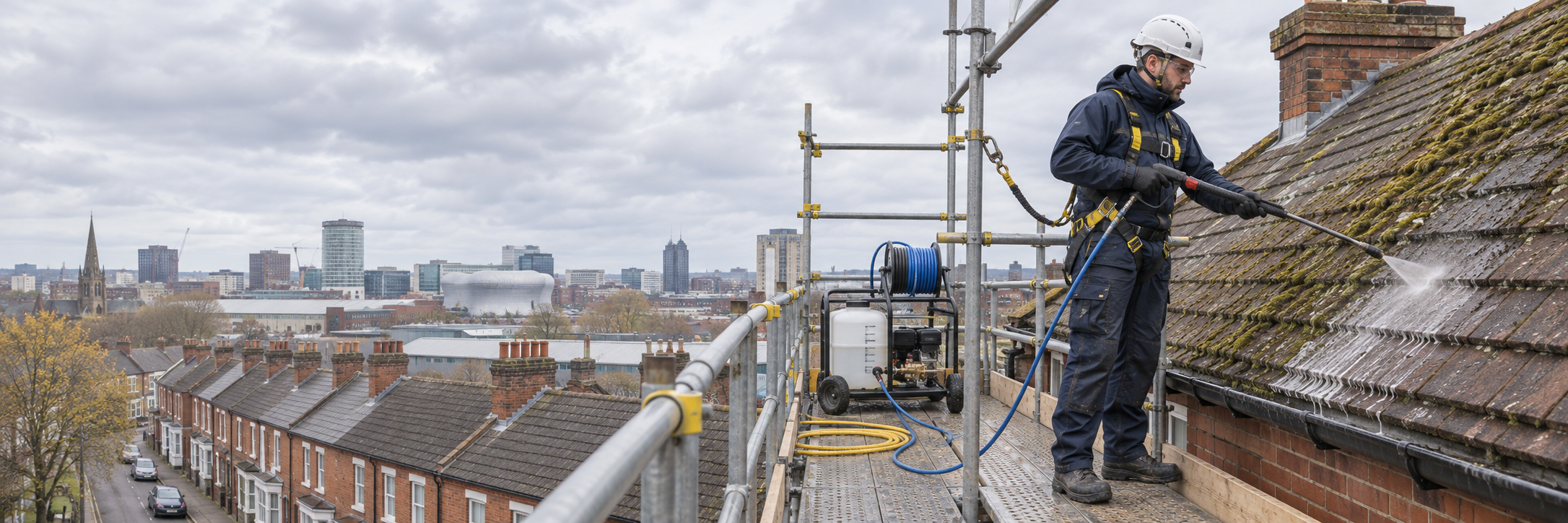
Roof cleaning in Birmingham with safe access and material-specific methods

Roof cleaning technician working from a scaffold platform with professional equipment in Birmingham

NOVA CLEAN · BIRMINGHAM

Roof care begins with the right access

Moss assessment, material protection and a method selected for the building.

Roof cleaning in Birmingham calls for more than a powerful machine and a clear day. Different coverings, access conditions and rainwater routes require different decisions. NOVA CLEAN Birmingham discusses the building and the purpose of the work before recommending a cleaning method. Our approach starts with safety, an honest assessment of the roof material and a defined scope of work.

The roof condition comes before the cleaning method

A roof covered with moss is often described as dirty, but appearance is only one reason to inspect it. Growth can hold moisture and gather at valleys or gutters, while loose tiles, failed mortar and damaged flashings may require a roofer before cleaning begins. NOVA CLEAN Birmingham starts with a visual assessment of the covering, pitch, access, nearby glazing and rainwater route. We distinguish a maintenance clean from repair work and explain which defects should be addressed by a roofing specialist. An attractive photograph of a newly washed roof cannot establish that its underlying fabric is sound.

Why safe access is the main planning decision

Roof cleaning is work at height. Before discussing detergents or moss removal, the team considers whether the task can be done from a safer position, and what platform, edge protection or other controls are appropriate where access at height is needed. A steep tiled roof, rooflights, brittle covering, conservatory below or narrow side passage can change the method and cost. A ladder alone is not a substitute for a suitable working platform for extended work. We inspect the ground for stable access and discuss pedestrian routes, parked cars and neighbours before machinery arrives.

Recognising fragile areas before anyone approaches

Rooflights, old fibre-cement sheets, deteriorated tiles and other surfaces may fail unexpectedly under a person. The Health and Safety Executive treats fragile surfaces as a serious issue in roof maintenance and cleaning. No technician should assume a roof is safe to walk on because it appears intact from the street. A survey of materials and construction is needed, with an access design that does not rely on the covering to support a worker. If asbestos cement is suspected, ordinary pressure washing is not an appropriate assumption and the job needs the relevant specialist assessment and method.

Moss, algae and lichen need different handling

Moss forms visible cushions that can collect at tile edges and gutters. Algae may present as a darker film, while lichen adheres more firmly to the surface and is not always removed without risking damage. These organisms do not justify one universal treatment. We consider the age, profile and finish of the tile, the degree of growth and the drainage arrangements. Where removal is suitable, debris should be captured rather than allowed to collect in downpipes or neighbouring gardens. Any biocide proposed must be appropriate for the surface and used according to its label and environmental constraints.

Avoiding aggressive treatment of older tiles

A strong jet aimed beneath a tile overlap can drive water where rain normally cannot reach. Abrasion can strip a protective surface or loosen already weathered material. For some roofs, carefully planned manual removal or a low-impact treatment can be more suitable than pressure washing. That choice follows inspection and a small test area if required. The client should know the expected finish: a roof may become cleaner without looking newly manufactured, and some staining may remain where further force would damage the fabric. Material conservation takes priority over a dramatic before-and-after effect.

Slate, clay and concrete coverings

Natural slate can be thin or brittle, especially when fixings have aged. Clay tiles may carry historic finishes or delicate edges, while concrete tiles can have a surface coating that reacts poorly to harsh abrasion. We record the material as accurately as possible and identify areas that appear loose, cracked or patched. The roof profile also affects how debris is lifted and water is directed. We do not promise that a method suitable for modern concrete tiles will be safe for an older clay or slate roof. Where the material is uncertain, the quote should remain conditional on closer assessment.

Commercial and industrial roof differences

A warehouse roof in Aston or Tyseley may involve long roof runs, drainage outlets, rooflights and plant equipment. A shop unit or school building may have flat sections with membranes that should not be treated like pitched tiles. Access permissions, working hours, loading areas and people below all affect the plan. We discuss whether the client has records of the roof material and any asbestos survey where relevant. An industrial roof with fragile sheets requires its own controls; a maintenance clean should never become an unplanned walk across unknown panels.

Gutters and downpipes as part of the assessment

Moss loosened from a roof can accumulate in a gutter and create an overflow after the next rainfall. The quote should state whether the gutters, valleys and outlets are included and how debris will be collected. Where access permits, we inspect for blockages and visible defects, but a cleaning crew cannot certify concealed drains or replace damaged gutters without an agreed additional trade. The location of downpipes matters if runoff could reach a neighbour, public footpath, planting or water feature. A tidy ground-level finish is part of a proper roof maintenance visit.

Runoff, planting and nearby surfaces

A roof often drains over patios, render, glazing, vehicles and established planting. We plan where loosened material and wash water will go before treatment begins. Protective arrangements may be needed at doors, air intakes and vulnerable garden areas. Product choices should account for surface instructions and the possibility that runoff leaves the roof. A client may prefer a method that takes longer but offers more control near a pond or sensitive planting. We include these details in the assessment rather than treating the roof as an isolated surface above the building.

Planning around Birmingham weather

Wind can make access platforms, spray drift and falling debris difficult to control. Rain may affect the application and contact time of a treatment, while frost makes footing and water management more hazardous. A booked date may need adjustment if conditions do not support the agreed method. We also consider whether the roof has had time to dry enough for a meaningful inspection, particularly after prolonged rain. The safest schedule is not always the first available morning, and the client should know what weather changes could delay work.

What the quotation should describe

A useful quotation identifies the roof area and material, access equipment, cleaning stages, gutter treatment, product use, debris removal and any exclusions. It should distinguish cleaning from repairs to tiles, flashing, ridge mortar and rainwater goods. If access is uncertain until a closer survey, that uncertainty should be clear before a price is treated as final. The same square metres can involve very different costs when one building has a safe flat approach and another has fragile rooflights, a steep pitch or no room for a platform. Photos can help us begin the discussion, but should not replace a needed assessment.

Preparation for a visit

Provide the postcode, an approximate building height, recent roof photographs if available and a description of any leaks or known repairs. Tell us about conservatories, extensions, solar panels, overhead cables, access gates, adjoining buildings and public areas below. If an asbestos register or building survey exists for a commercial property, it should be available to the person planning work. We ask whether the building remains occupied and where equipment can be placed. Clear information early prevents an unsuitable method being proposed and reduces disruption on the working day.

Solar panels and rooftop equipment

Solar arrays, aerials, ventilation outlets and skylights can limit access and create distinct material and electrical considerations. Cleaning a roof around panels is separate from cleaning the panel glass or servicing the electrical installation. We identify where panels are mounted, how cables are routed and whether the client has instructions from the installer. No cleaning method should direct water into damaged electrical equipment or dislodge a mounting. If a panel or roof attachment appears defective, the relevant specialist should assess it before the cleaning proceeds in that area.

Neighbouring property and shared roofs

Terraced houses in Bournville, Harborne, Erdington and Kings Heath often have close boundaries, shared gutters or rear access through a narrow passage. We plan the working area so that debris is contained and access remains clear. A neighbour may need notice if scaffolding or a platform requires agreement or access. Where ownership of a shared roof element is uncertain, the client should resolve permission before authorising treatment. We can describe the proposed working footprint and sequence so that practical arrangements are made without implying consent on behalf of another owner.

Heritage materials and older Birmingham buildings

Some Birmingham properties have distinctive clay tiles, slate, ornate edges or a protected architectural setting. A more conservative approach may be appropriate where a strong treatment could change an original finish. If the building is listed or work could affect protected fabric, the owner should check the relevant consent requirements and seek suitable conservation expertise. We do not present a clean surface as more important than the long-term condition of historic material. A test and an honest description of the likely visual result are more useful than a guarantee of uniform colour.

Why stain removal has limits

Dark marks are not always living growth. Ageing, soot, mineral deposits and previous coatings can change the colour of a roof even when the surface is clean. We explain which change is realistic for the material and may suggest treating a small area before agreeing to a wider process. A roof with mixed replacement tiles will not become one uniform shade through washing. Photographs of the result should be read alongside the building history, and any visual target should be agreed without encouraging a damaging level of abrasion.

Keeping occupants and visitors informed

Where a building stays open during cleaning, people below need to know which entrances, paths or parking spaces will be temporarily unavailable. We identify the working area and plan a route for equipment and collected debris. On a commercial premises, the building manager may need to coordinate deliveries and maintenance contractors. On a home, children, pets and visitors should be kept away from the work zone. Communication before arrival prevents a hurried change to the access plan once the team and equipment are on site.

After cleaning and ongoing maintenance

Once the work is complete, the team should explain which sections were treated, what debris was removed and whether any roof defect became visible. Some growth can return because the building remains exposed to shade, moisture and airborne spores. Timing of a future inspection depends on trees, pitch, roof material and drainage, not a fixed annual promise. Keeping gutters clear and addressing leaks promptly can be more valuable than repeating a harsh clean. If tiles or flashing need repair, arrange a roofer to review them rather than assuming cleaning has resolved the underlying issue.

Areas served across the West Midlands

We discuss roof cleaning in Birmingham city centre, Edgbaston, Selly Oak, Moseley, Yardley, Acocks Green, Hall Green, Kings Norton, Erdington, Aston, Handsworth Wood, Kingstanding, Bournville and Sutton Coldfield. Enquiries from Solihull, Sandwell, Dudley, Walsall, Wolverhampton and Coventry can also be assessed. Local detail matters because a narrow Victorian street, a retail estate and a detached suburban house present different access and traffic conditions. Give us the full postcode and roof type so we can consider the right equipment and likely visit arrangements.

A practical next step for owners and managers

Contact NOVA CLEAN Birmingham with photographs taken from a safe position, a note of any leaks and the building address. There is no need to climb onto the roof to provide more information. We can explain what can be assessed remotely and when a closer inspection is necessary. Phone 0845 52 805 20 or email This email address is being protected from spambots. You need JavaScript enabled to view it. to discuss the roof, access and intended outcome. The written scope will focus on the material, safe method and limits of the work so that cleaning is planned as building maintenance rather than a cosmetic shortcut.

Request a cleaning quote or call 0845 52 805 20.

NOVA CLEAN CLEANING COMPANY · BIRMINGHAM

Specialist cleaning for homes, landlords and business premises across Birmingham and the West Midlands. Detailed assessment for difficult properties, clear quotations and practical local planning.

Established in 2015.

Discuss your cleaning project

0845 52 805 20

contact@cleaning-company-birmingham.com

Request a cleaning quote

Send your postcode, photographs and access details so we can discuss a realistic scope.

Technicians and cleaning companies: work with us

Across the West Midlands

● Dudley● Wolverhampton● Walsall● West Bromwich● Birmingham● Solihull● Coventry

From Birmingham and nearby boroughs to Coventry and Wolverhampton, tell us your postcode so we can confirm coverage and availability.

Nova Clean Birmingham · Birmingham and the West Midlands · Contact us · Cleaning advice · Legal notice and privacy

↑

We have 106 guests and no members online