
House clearance and decluttering in Birmingham with a room-by-room plan

NOVA CLEAN · BIRMINGHAM

Clear a property with a considered plan

House clearance, sorting and cleaning across Birmingham and the West Midlands.

Define the clearance before anything moves

A house clearance in Birmingham can mean a few rooms of furniture, a property left full after a move, or a difficult home where access is blocked by accumulated possessions. We start by establishing ownership, the rooms included and the intended result. The client may want selected objects retained, reusable goods separated, waste removed and a follow-on clean. Each instruction needs to be clear before a technician begins sorting. Photographs of every room, cupboards, garden stores and access routes help us estimate volume and identify hazards. A quotation describes the scope rather than promising that a property will be empty regardless of what it contains.

Flood and water damage cleaning in Birmingham after leaks and inundation

NOVA CLEAN · BIRMINGHAM

A careful route from water removal to a clean property

Assessment, controlled cleaning and clear boundaries for drying and repairs.

A safe first response after water enters a Birmingham property

Water damage can begin with a burst supply pipe in a Harborne terrace, a failed appliance in a Jewellery Quarter apartment or heavy rain entering a ground-floor business. The visible puddle is only one part of the problem. Water may run behind skirting, beneath flooring and through ceilings into rooms below. Before arranging cleaning, stop the source when it is safe to do so, follow the advice of the relevant utility or building professional and keep people away from electrical hazards and unstable materials. NOVA CLEAN Birmingham discusses the cleaning scope once access is authorised and the source of water is understood. We distinguish immediate removal of contaminated material, surface cleaning, structural drying and repairs so that nobody assumes a single visit resolves every stage.

Fire extinguisher discharge before smoke damage cleaning in Birmingham

Fire and smoke damage cleaning in Birmingham after a property fire

Fire extinguisher discharge during an incident before smoke damage cleaning

NOVA CLEAN · BIRMINGHAM

A measured response after a property fire

Soot, smoke film and water damage assessed before cleaning begins.

The first decisions after a fire shape the cleaning work

Fire and smoke damage cleaning in Birmingham starts with a question that is more useful than how quickly the soot can be removed: is the property ready for safe access? A small kitchen fire, a bedroom incident and smoke migration through a shared building produce different conditions. Water used to control the fire can introduce a second problem. Before arranging cleaning, the occupier or responsible manager should follow the instructions of the fire service, building owner and insurer, and keep people out of unsafe areas. NOVA CLEAN Birmingham can discuss a practical cleaning scope once the affected rooms, access arrangements and any urgent hazards are clear. We distinguish surface cleaning from repairs, electrical checks, drying and structural work so each responsibility is visible in the quotation.

Soot, smoke film and odour do not spread in the same way

Soot often settles on horizontal surfaces, yet smoke also travels through door gaps, ventilation routes, stairwells and cavities. Deposits may be dry and powdery or greasy and strongly bonded, particularly near the source of the fire. An apparently clean adjoining room can still hold a thin film on cupboards, light fittings and window reveals. Smell can persist in porous materials even after visible residue has been removed. We therefore map the route of smoke rather than restricting attention to the blackest wall. Photographs, the fire location, whether doors were open, the ventilation arrangement and the time since the incident help identify areas needing inspection. An odour treatment chosen before removing its source is unlikely to give a dependable result.

Access and safety before cleaning begins

The first visit is planned around the condition of the building. Damaged ceilings, exposed wiring, unstable fittings, shattered glass and contaminated standing water may need specialist attention before a cleaning team can work. The person controlling the property should confirm who has authorised entry and whether gas, electricity and water supplies have been made safe. We agree a route for staff and equipment, identify any restricted rooms and discuss the protection needed for unaffected spaces. A cleaner cannot declare a building structurally sound or certify an electrical installation. If the area remains unsafe, cleaning must wait until competent trades have addressed the hazard. This protects residents, employees and the people carrying out the work.

A written scope for each affected room

A useful fire cleaning quotation describes rooms, surfaces and the degree of treatment required. It should say whether work includes walls, ceilings, joinery, hard flooring, fittings, accessible cupboards and removable items, and where access is excluded. We identify materials likely to need further assessment, such as porous plasterboard, insulation or severely charred furniture. We also separate debris clearance, cleaning, drying, deodorisation and reinstatement when these are distinct stages. This prevents a broad phrase such as full restoration from obscuring what will actually be done. Where the extent of smoke migration cannot be judged from images, an inspection can refine the scope before a firm sequence and price are agreed.

Protecting contents that may be recoverable

A fire can affect possessions that are valuable for practical or personal reasons. Before any clearance, the owner should identify documents, keys, medicines, devices and items to retain for an insurer or specialist restorer. We agree what may be handled, what should be photographed and how decisions on disposal will be recorded. Some hard, washable items may respond to careful cleaning, while absorbent contents can retain smoke residue or odour. Heat damage may change the item itself even if its surface looks clean. A cleaning team should never promise that every textile, electronic device or document can be recovered. If an item requires specialist conservation or electrical assessment, that is explained before treatment.

Dry soot and greasy deposits require different methods

Using a damp cloth on loose dry soot can drive contamination into paint, textured finishes or upholstery. The sequence may begin with controlled dry removal using suitable filtration and tools, followed by material-specific treatment where appropriate. Greasy residues from plastics, cooking oils or furnishings behave differently and can require a carefully tested cleaning agent. We check a discreet area before treating a wider surface, consider ventilation and collect removed residue without spreading it through the property. The objective is to remove contamination while limiting damage to the substrate. A method that works on glazed tile may be unsuitable for matt paint, untreated timber or delicate stone.

Walls, ceilings and painted finishes

The ceiling and upper walls often show the direction and intensity of smoke travel. We assess whether the coating is sound enough to clean and whether water or chemicals could leave runs, discoloration or softened paint. Gentle dry techniques may be appropriate for some deposits; heavier residue can require a different process or subsequent redecoration. Cleaning cannot reverse blistering, scorching or a damaged plaster substrate. We mark the boundary between a cleanable finish and an area needing repair so the owner can plan trades in the right order. Applying a sealing coat over residual contamination without proper preparation risks trapping an odour source or creating a poor finish.

Hard floors, wood and sensitive surfaces

Tile, vinyl, sealed stone and other hard floors can collect soot in joints and edges. Their cleaning method depends on the finish, condition and residues present. Timber may have absorbed moisture from firefighting; aggressive wet cleaning can worsen swelling or staining. Laminate joints, unsealed wood and porous stone demand particular caution. We examine skirting, thresholds and the underside of removable mats as well as the visible central floor. Furniture feet and moving equipment can carry residue into a previously unaffected room, so the work route matters. Where a floor has buckled, delaminated or suffered heat damage, the quotation should identify repair or replacement as a separate matter.

Kitchens and appliances after smoke exposure

A kitchen fire often creates concentrated greasy soot around the cookline, cupboards and extraction area. Food, packaging and open ingredients may have been exposed to smoke, heat or firefighting water and should be assessed by the responsible occupier rather than treated as ordinary cleaning stock. We can clean accessible external appliance surfaces when it is safe to do so, but electrical and gas equipment requires checks by qualified specialists before use. We also distinguish a canopy face clean from internal extraction ductwork, which needs its own access and scope. Hidden grease and soot in ventilation components cannot be ruled out by wiping visible stainless steel.

Water used to extinguish the fire changes the plan

After an incident, moisture may remain under flooring, behind skirting or inside building materials even when the visible surface has dried. Cleaning over damp material can complicate later repairs and may allow additional damage. The water source, amount, exposure time and construction materials should be considered before wet cleaning or deodorisation. Drying and moisture investigation may need a separate specialist process. We discuss what is visibly wet, whether extraction has taken place and when contractors can safely work. If the property has an active leak or unresolved moisture, the source needs attention first. The fire and water elements should appear separately in the work record and insurer communication.

Odour reduction follows removal of the source

Smoke odour can cling to soft furnishings, porous plaster, timber, insulation and contents stored behind closed doors. Ventilating a room may improve comfort but cannot reliably remove trapped residue. We assess which surfaces are cleanable, which contents may need separate treatment and whether a remaining odour points to an inaccessible source. Any additional odour process should be selected for the material and occupied status of the property, with clear preparation and re-entry instructions. It should never substitute for soot removal or necessary repairs. We avoid promising that one application will permanently eliminate every smell, because the result depends on the nature and extent of contamination.

Shared buildings and neighbouring premises

In a Birmingham block of flats, converted house, shopping parade or managed office, smoke can move beyond the original unit. The managing agent may need to coordinate keys, shared access, lifts, corridor protection and work times with neighbouring occupiers. A clean in the affected flat does not automatically cover a common stairwell or adjacent premises. We record the agreed boundary and any additional areas surveyed. If alarms, ventilation equipment or fire doors were affected, the responsible building professional should assess them. The cleaning programme should respect residents returning to the building and keep passageways safe while materials and equipment are moved.

Birmingham locations and working arrangements

We discuss enquiries across Birmingham, including Edgbaston, Harborne, Bournville, Selly Oak, Moseley, Kings Heath, Digbeth, Jewellery Quarter, Aston, Erdington, Sutton Coldfield and the city centre. A high-rise apartment may require lift booking and a loading plan; a suburban house can have different access and parking constraints. Shops and food premises may need a closure window, while a managed rental property requires clear authority from the landlord or agent. Please provide the postcode, floor level, parking arrangements, key holder and any time restrictions. Availability and coverage are confirmed for each address rather than assumed from a locality list.

Insurance records and clear evidence

The insurer or loss adjuster may request photographs, an inventory and a description of the affected areas before work starts. Keep any instructions, reference numbers and reports together, and ask the insurer what may be removed or disposed of before authorising clearance. We can define our cleaning work in a written quotation and describe the areas treated in a completion record where agreed. We do not determine policy cover, promise reimbursement or replace an independent loss assessment. If different contractors are involved, the documentation should distinguish cleaning from drying, demolition, repairs and contents restoration. This makes it easier for the owner to follow the work and to identify what remains outstanding.

What influences the price of fire cleaning

The size of a room alone rarely predicts the cost. A lightly affected adjacent bedroom differs from a kitchen with greasy soot on ceilings, cupboards and equipment. Price depends on the type and spread of residue, material sensitivity, access, protection, clearance requirements, contents handling, specialist equipment and the number of work stages. The urgency of the request can affect scheduling, but safety and a workable scope remain essential. A remote estimate may be possible when photographs and dimensions are clear; extensive or mixed damage may require an inspection. The quote should explain assumptions and exclusions, including whether waste transport, drying, odour treatment and repairs are included.

Preparing the property for a survey

Only enter the building if the relevant authorities and responsible professionals have confirmed it is safe. If permitted, gather photographs of each affected room, including wider views and close-ups of representative deposits, without disturbing dangerous materials. Note the fire location, date, whether water was used, rooms with smoke smell and any visible damage outside the original area. Provide approximate room dimensions, the occupancy status and the contact details of the authorised key holder. Tell us if children, pets or vulnerable people may need access while work is planned. Do not use ordinary household products on soot before the material and deposit have been assessed, as rubbing can make staining harder to remove.

The sequence from assessment to handover

Once access is authorised, the work is organised so contamination is not carried back into clean rooms. The sequence can include protection of the route, agreed removal of loose debris, controlled treatment of soot, cleaning of suitable surfaces, a review of remaining odour sources and final inspection against the written scope. The actual order changes with the property and any drying or repair work. We explain what was treated, what could not be cleaned safely and which areas require another trade. If a finish needs redecoration, that should be stated plainly. A useful handover leaves the owner with an accurate account of the work rather than a vague assurance that the whole property has been restored.

Where specialist trades take over

Fire cleaning is one part of recovery. Structural damage, electrical systems, gas appliances, ventilation internals, asbestos concerns, extensive moisture, specialist document conservation and rebuilding may all require separate competent professionals. If access to a void is needed or material appears unsound, we should not hide that limitation in the cleaning scope. The responsible owner or manager can coordinate trades and their order of work with the insurer. Cleaning too early may result in repeated contamination from repairs; cleaning too late can delay a safe handover. A staged plan helps each contractor work on the right conditions and provides a clearer cost record.

Advice for landlords, agents and business managers

A landlord or managing agent should first establish who can authorise entry, disposal and expenditure. Record the affected rooms, the condition of retained contents and the instructions received from the insurer. For commercial premises, agree which equipment is isolated, what stock is moved and who verifies systems before reopening. Occupants should receive realistic information about restricted areas and expected stages. We can discuss the cleaning element with the decision maker and specify whether the property is vacant, partly occupied or awaiting repair. A clear chain of approval avoids unnecessary handling of possessions and prevents a work team from being asked to make decisions outside its remit.

A practical enquiry for fire and smoke damage in Birmingham

Tell NOVA CLEAN Birmingham where the fire occurred, which rooms have visible soot or smoke odour, whether firefighting water entered the property and whether access has been confirmed safe. Send the postcode, photographs, approximate size, occupancy status and any insurer instructions that affect cleaning or disposal. We can discuss the likely stages and arrange a suitable assessment where the conditions cannot be judged remotely. For properties that also need a planned post-repair clean, the separate after builders cleaning service can be considered once trades have finished. To discuss the affected property, call 0845 52 805 20 or email This email address is being protected from spambots. You need JavaScript enabled to view it..

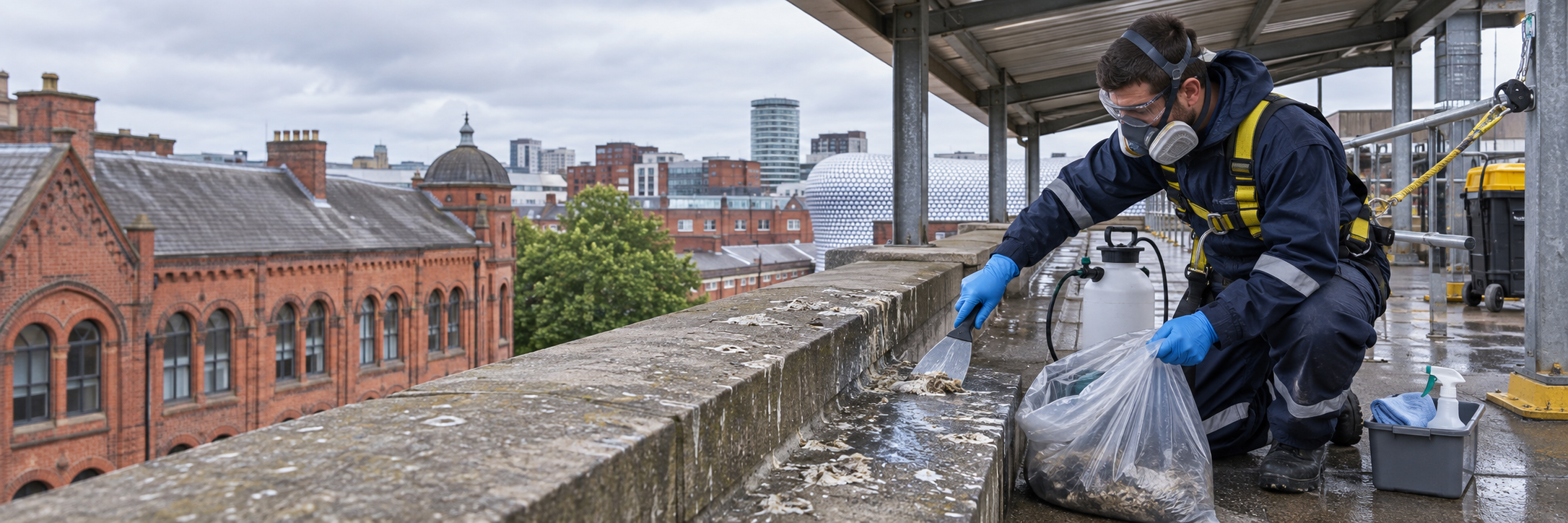
Pigeon droppings cleaning in Birmingham for roofs, ledges and occupied buildings

Technician removing pigeon deposits from a Birmingham rooftop ledge using a controlled method

NOVA CLEAN · BIRMINGHAM

Controlled cleaning of bird deposits

Safe access, thoughtful containment and protection of the building fabric.

Pigeon droppings on a Birmingham property can affect a doorstep, a balcony, a warehouse roof or an enclosed loft. Each setting requires a different assessment. NOVA CLEAN Birmingham plans the removal around safe access, dust control, the materials beneath the deposit and any active birds or nests before the cleaning begins.

Why an assessment matters before removal

Bird droppings on a windowsill are different from years of accumulation beneath a roof void or on a warehouse ledge. The quantity, dryness, access, nesting activity and building material all change the method. NOVA CLEAN Birmingham asks where the deposits are, how people use the area and whether birds are still present. A small accessible deposit may need a controlled local clean; a large build-up in a loft or plant area calls for a planned response, protective equipment and suitable waste handling. We identify the affected boundaries before quoting so the client knows which surfaces and adjacent areas are included.

Health concerns without sensational claims

Dried bird droppings can produce dust when disturbed. The Health and Safety Executive notes that work involving bird droppings may expose workers to harmful microorganisms and that inhalation of contaminated dust or droplets can cause illness. Risk depends on the activity and conditions; the presence of a stain alone does not establish a disease. A practical control plan considers who may be exposed, how deposits will be handled, whether the area is enclosed and the individual suitability of staff for the task. People with weakened immunity should avoid direct involvement in contaminated work and seek medical advice if they have a health concern.

Protecting occupants and the working area

Before work starts, access is restricted so residents, customers and other contractors do not pass through the active cleaning zone. In a shop entrance or communal stairwell, we discuss an out-of-hours slot or a temporary route. Windows, ventilation intakes, stored goods and vehicles below the deposit may need protection. The technician plans a clean route for bringing in equipment and a separate route for sealed waste. A useful plan keeps dust, runoff and dislodged material from reaching other rooms or neighbouring premises. We tell the client which areas should remain closed until the work is complete.

A controlled sequence for dried deposits

Dry sweeping, aggressive brushing and ordinary vacuuming can put material into the air or contaminate unsuitable equipment. The method is selected to limit dispersal, often using a controlled damp approach and appropriate equipment rather than directing a powerful jet at an unknown surface. Loose material is gathered into suitable containers, and the remaining surface is cleaned according to its condition. Where disinfection is indicated, the product must be compatible with the material and used for its specified purpose and contact time. We do not imply that spraying a chemical over a deep deposit removes the need for physical cleaning.

Safe access to ledges, balconies and roofs

Pigeons favour difficult places such as high signage, roof edges, loft openings and plant platforms. A balcony reached from an occupied flat has different hazards from a parapet above a public pavement. We assess working at height, fragile surfaces, falling objects and safe equipment placement before committing to the job. A ladder is not a universal solution for extended cleaning. If a roof covering or rooflight may be fragile, access requires an appropriate design, and an unsafe area is excluded until suitable controls are available. A quote should identify access equipment and any permissions needed for a pavement or neighbouring property.

Wild birds and active nests

Cleaning must be planned around wildlife protections. In England, wild birds, their eggs and nests are protected under the Wildlife and Countryside Act, and an active nest should not be damaged or disturbed by a routine cleaning visit. The presence of birds, eggs or nesting material changes the timetable and may require advice from a qualified wildlife specialist or a licence in particular circumstances. We do not present droppings removal as permission to move an active nest or block birds inside a building. The owner should describe any nesting activity when requesting a quote, and the team checks before beginning.

Brick, stone, render and metal need different methods

Birmingham buildings include red brick, sandstone details, painted render, glazed tile, powder-coated metal and modern cladding. Bird deposits can be acidic and may leave staining, but a chemical strong enough to strip a mark may also damage the surface. We assess porosity, paint condition and previous repairs, then use a method compatible with the material. A test area may be needed where the finish is delicate or the age of a stone is uncertain. The expected result should be agreed honestly; cleaning cannot reverse etching or corrosion that has already occurred.

Lofts, voids and indoor contamination

An open eave or broken vent can allow birds into a roof space, leaving deposits on insulation, stored boxes and structural members. Enclosed conditions make dust control and ventilation more important, and a technician should check for electrical cables, pests and unstable boarding. The scope may include removal of heavily affected loose material, controlled cleaning of accessible surfaces and a separate recommendation to repair the entry point. Insulation and absorbent goods cannot always be made suitable for retention by wiping their surface. We discuss what can remain and what needs replacement before items are removed.

Commercial premises and public entrances

A food business, shopping frontage, rail-adjacent property or office entrance may need rapid control of a slipping or hygiene concern while remaining operational. The location determines whether barriers, temporary signs, a different working hour or a specialist access platform is required. Cleaning above a public route also needs a plan for falling debris and any liquid runoff. We coordinate with the authorised building manager so deliveries and occupants are not surprised by a blocked entrance. If pest control or physical bird proofing is required, that is specified separately from removing the existing deposit.

Waste classification and disposal

Collected droppings, nest debris and contaminated disposable materials require sensible containment and classification. The amount, source and contamination profile affect the handling route. We do not put a large accumulation into an ordinary litter bin or leave bags in a shared passage. The quote should state whether bagging, collection and disposal are included, and how material is kept secure before collection. Where other hazardous material is present, such as asbestos-containing building fabric or needles, a different specialist approach is needed. Clear documentation helps facilities managers understand what was removed and what remains.

When disinfection is appropriate

The purpose of disinfection is to address a defined hygiene risk after physical soil has been removed from a suitable surface. It is not a substitute for clearing a deep build-up. A technician selects a product with relevant instructions, checks contact time and material compatibility, and keeps people out of the treatment area as needed. We avoid unsupported promises that a roof void or open-air ledge can be permanently sterile. Repeated bird activity can recontaminate a cleaned surface, so prevention and building repair are as important as the immediate clean.

Preventing a quick return

After the affected surface is cleaned, the owner can inspect why birds were able to roost: open eaves, accessible ledges, food sources, damaged screens or sheltered plant structures. Proofing options require a separate design that respects building materials and wildlife law. Netting or spikes installed badly can trap birds, block maintenance or damage a façade. We can point out likely access points during the cleaning assessment and explain when a pest or bird control specialist should review them. Cleaning without addressing the source may be necessary for immediate safety, but it should not be sold as a permanent prevention scheme.

Neighbouring windows, gutters and drainage

Deposits frequently collect where a gutter meets a parapet or beneath a rooftop unit. Removal may expose a blocked outlet or a corroded fitting. We plan to catch material before it travels into a downpipe, and we protect lower glazing and gardens from debris. Where an area cannot be reached without building works, the limitation is described rather than concealed. The client may need a separate gutter repair, roofing or façade contractor after the clean. A final ground-level check helps ensure that the working route and surfaces below have not been left with residue.

Local property types around Birmingham

A city centre ledge near New Street demands different pedestrian controls from a rear balcony in Edgbaston or a low industrial roof in Tyseley. Older terraces in Aston, Small Heath and Handsworth can have narrow passages, brick parapets and shared boundaries. Retail estates around Perry Barr or Erdington may involve loading access and working hours. We use the postcode, building height and photos taken from a safe location to plan the visit. The local setting shapes equipment and timing, while the amount and condition of the deposits shape the cleaning method.

Keeping photographs and records proportionate

A facilities manager may need a simple record of the affected areas and the completion of cleaning, especially if maintenance or proofing follows. We can discuss photographs of the working area when the owner agrees and keep them limited to what is needed to explain the scope. Images of occupants or private belongings should be avoided. A clear description of the area cleaned, waste collected and any inaccessible section is more useful than a large set of dramatic pictures. Where a repair or wildlife decision remains, it should be recorded separately so the client can assign the right next contractor.

What a useful quote contains

A written scope identifies affected areas, height and access, estimated accumulation, cleaning stages, any disinfection, containment, waste collection and exclusions. If the work depends on confirming that no active nest is present, this condition should be stated. We also distinguish stain removal from the cleaning of present contamination and point out any visible material damage that cleaning cannot repair. An apparently small patch above a busy street can cost more to access safely than a larger surface at ground level. A quote based on a photograph is provisional where important conditions are hidden.

Before a technician arrives

Tell us whether birds are still present, whether there is an active nest, how people reach the affected area and whether any public route passes underneath. Photographs should be taken from a safe position. Do not climb onto a roof or enter a heavily contaminated loft to collect more images. Where the building is managed by a landlord or agent, confirm who can authorise the visit and who controls access. Let us know about known asbestos, fragile roofing, rooflights or electrical equipment. These details allow the team to bring suitable equipment and avoid an unsafe change of plan on arrival.

Aftercare and monitoring

Once the work is complete, the client should know which areas were cleaned, whether staining or material damage remains and whether a roof or façade repair is recommended. The team can identify likely roosting points, but the owner must decide whether to commission proofing and ongoing inspection. A short monitoring period may show whether birds return to the same ledge. If deposits reappear, the cause should be reviewed rather than repeatedly applying stronger chemicals. Routine maintenance of gutters, screens and openings can reduce the need for another intensive clean.

Work across the West Midlands

We discuss pigeon droppings cleaning across Birmingham, including Ladywood, Digbeth, Edgbaston, Harborne, Erdington, Aston, Hodge Hill, Hall Green, Kings Norton, Acocks Green, Bournville and Sutton Coldfield. We can also assess enquiries from Solihull, Sandwell, Dudley, Walsall, Wolverhampton and Coventry. The practical reach of a job depends on safe access, wildlife activity and the scope rather than the city name alone. Give us the postcode and the type of surface so we can explain the next step.

Arrange a careful assessment

Contact NOVA CLEAN Birmingham on 0845 52 805 20 or at This email address is being protected from spambots. You need JavaScript enabled to view it.. Describe where the deposits are, how long they may have accumulated, whether people pass below and what material needs cleaning. We will explain whether photographs are enough to begin a quote or whether a visit is required. The aim is a controlled clean, a clear account of waste and practical advice about the building condition, with no unnecessary disturbance to birds or occupants.

Request a cleaning quote or call 0845 52 805 20.

Hoarding cleaning and house clearance in Birmingham

Careful hoarding property clearance in BirminghamA heavily cluttered home can become difficult to use long before every room is full. NOVA CLEAN Birmingham helps people plan hoarding cleaning, staged clearance and detailed property cleaning across Birmingham and the wider West Midlands. We approach the work as a practical property project, with attention to the person affected, the contents that matter and the condition hidden beneath accumulated belongings. The first discussion establishes who can authorise the work, which rooms need attention and whether there are immediate access, fire or hygiene concerns.

Assess the property before moving possessions

Photographs and a short description help us understand the amount of material, but an inspection may be needed where circulation routes are blocked or flooring and fixtures cannot be seen. We ask whether the property is occupied, whether electricity and water are available, whether pets are present and whether a landlord, family member or support professional is involved. We also establish clear instructions for documents, medication, valuables and sentimental possessions. No responsible team can decide what should be discarded solely by looking at a crowded room.

A property in a terraced street in Aston may have narrow stairs and limited loading space. A flat in Ladywood may require lift protection and a booking with building management. Houses in Bournville, Harborne and Kings Norton can present very different access routes, storage arrangements and garden outbuildings. These practical details influence the number of people, equipment and collection arrangements needed. Tell us about parking, communal areas, restricted hours and any areas that must remain usable during the intervention.

Agree a staged clearance and cleaning sequence

We normally define working zones so that decisions about possessions are made before cleaning begins. Items for retention can be separated from authorised waste, while materials requiring specialist handling remain identifiable. Where the person who lives in the home wishes to participate, a staged approach can reduce disruption and allow decisions to be reviewed at a manageable pace. Where occupancy or safeguarding concerns are present, the responsible family member or professional should explain the practical constraints before a timetable is agreed.

Cleaning follows clearance and the condition found underneath. Surfaces may need dry debris removal, targeted washing, degreasing or disinfection, depending on the actual deposit. Stains and odours can have distinct causes. A persistent smell may come from spoiled food, damp materials, animal waste or hidden contamination, and cosmetic fragrance does not resolve the source. We explain what can be cleaned, what requires disposal and what may need a separate repair, pest control or building professional.

Protect people and the building

Before work starts, we consider sharps, unstable stacks, damaged electrical fittings, mould, biological residues and blocked exits. Personal protective equipment and equipment choices should follow the assessment rather than a standard package. A vacuum suitable for fine dust, controlled bagging and appropriate cleaning products may be useful, but products must be compatible with the surfaces and used according to their instructions. We do not promise that every finish can be restored: staining, water damage and deterioration can remain after a thorough clean.

Waste removal should be described separately from cleaning, with an agreed list of material to be taken away and a legitimate disposal route. If there are hazardous materials, unknown chemicals or suspected asbestos, work in the affected area should pause for suitable specialist advice. If a property is structurally unsafe or utilities are defective, the relevant trade must address that risk before cleaning can continue. The quotation should make these boundaries clear so that nobody assumes repairs are included.

Planning work around Birmingham households

We discuss enquiries from Acocks Green, Aston, Bartley Green, Billesley, Bordesley Green, Bournville, Brandwood, Edgbaston, Erdington, Hall Green, Handsworth Wood, Harborne, Hodge Hill, Kings Norton, Kingstanding and Ladywood. Coverage and availability are confirmed for each address. A postcode, approximate property size, clear photographs and a summary of the desired outcome help us determine whether the next step is a remote estimate or a visit. Please mention stairs, parking, basements, lofts, sheds and any restricted access.

A quotation should describe the rooms, clearance volume where relevant, cleaning tasks, exclusions and anticipated working conditions. Where the contents cannot yet be assessed, we may recommend a first phase to create safe access and then review the remaining work. This helps avoid a vague price based only on the number of bedrooms. At handover, the completed areas can be checked against the agreed scope, including any surfaces that cannot safely be cleaned or that need another specialist.

Speak to NOVA CLEAN Birmingham

Tell us what has happened and what you would like the home to become. You do not need to share a personal history to request practical help. Call 0845 52 805 20 or email This email address is being protected from spambots. You need JavaScript enabled to view it.. We will discuss access, the people involved, the state of the property and the next sensible step before proposing a scope of work.

NOVA CLEAN CLEANING COMPANY · BIRMINGHAM

Specialist cleaning for homes, landlords and business premises across Birmingham and the West Midlands. Detailed assessment for difficult properties, clear quotations and practical local planning.

Established in 2015.

Discuss your cleaning project

0845 52 805 20

contact@cleaning-company-birmingham.com

Request a cleaning quote

Send your postcode, photographs and access details so we can discuss a realistic scope.

Technicians and cleaning companies: work with us

Across the West Midlands

● Dudley● Wolverhampton● Walsall● West Bromwich● Birmingham● Solihull● Coventry

From Birmingham and nearby boroughs to Coventry and Wolverhampton, tell us your postcode so we can confirm coverage and availability.

Nova Clean Birmingham · Birmingham and the West Midlands · Contact us · Cleaning advice · Legal notice and privacy

↑

We have 106 guests and no members online