Commercial kitchen cleaning in Birmingham for restaurants and food premises
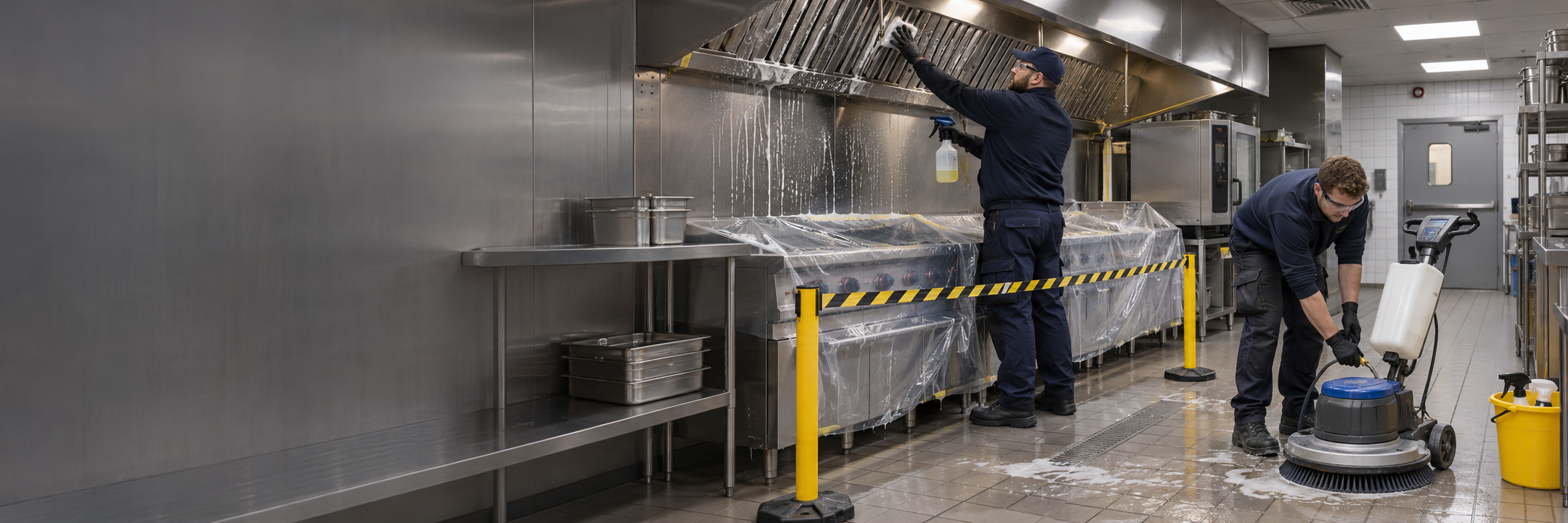
Commercial kitchen cleaning in Birmingham should fit the actual equipment, cooking pattern and operating schedule of the food business. NOVA CLEAN Birmingham plans a defined deep clean for accessible surfaces, grease deposits and floors while explaining where extraction ductwork, appliance service and the operator own hygiene controls require separate attention.
A kitchen clean begins with the operating plan
A restaurant kitchen cannot be treated as an empty room full of stainless steel. Food stocks, equipment, staff shifts, gas and electrical appliances, extraction, drainage and allergen controls all affect the work. NOVA CLEAN Birmingham discusses the closure window, who can isolate equipment, which areas are due for deep cleaning and what the food business already does every day. The aim is to address built-up grease and hard-to-reach soil without disrupting the operator hygiene system. A useful scope identifies surfaces and equipment individually rather than promising a vague total kitchen clean.
Separating routine hygiene from deep cleaning
Daily cleaning by kitchen staff covers the items used during service, but heavy deposits can develop behind cooklines, beneath fixed units, around floor edges and above accessible surfaces. A planned deep clean can address these areas when equipment is safely available. It does not replace the food business responsibility for everyday cleaning, allergen management, temperature control or pest prevention. We agree what will be moved by the operator, which removable components can be cleaned and what needs a specialist contractor. This division prevents an important gap between normal hygiene duties and an occasional intensive visit.
Surveying grease and food residues
The technician examines canopy surfaces, splashbacks, shelving, skirting, joints, drains, wall tiles and the route between preparation, cooking and wash areas. Fat deposits differ from baked-on carbon, mineral scale or protein residues. We note damaged grout, loose tiles, corroded metal and inaccessible voids before specifying chemistry or equipment. Where a restaurant has several cooking styles or outlets, each zone may need a different process. A short survey also identifies where degreased liquid could travel and whether drainage needs protection. Cleaning a visible canopy face alone does not show that every hidden component is free of grease.
Safe isolation and equipment responsibilities
Commercial kitchens include hot surfaces, moving parts, gas connections and electrical controls. The food business should identify the authorised person who can isolate, cool and make appliances available before cleaning. A cleaning technician does not dismantle a gas line, certify an appliance or restart equipment after a repair. If access behind a unit requires disconnection, that belongs to a suitably qualified trade. We agree the order of work so no one applies liquid to live equipment or handles a fryer before it has cooled. Clear responsibilities are as important as the detergent selected.
Canopy and accessible extraction surfaces
Grease deposits around hoods and removable filters can affect cleanliness and ventilation performance. HSE catering guidance notes the need for extraction components that can be cleaned and for regular maintenance to reduce grease build-up. We describe whether the scope includes the canopy exterior, accessible interior and filters, and how each item will be cleaned. Ductwork, fans and inaccessible internal sections require a separate assessment and competent specialist provision where appropriate. We do not issue an extraction certificate for a surface clean or suggest that wiping the visible hood treats the entire ventilation system.
Ductwork and the limits of a kitchen deep clean
Extraction ductwork may extend through walls, ceilings and plant areas. Its condition cannot be verified by looking at the canopy face. If the client requests a full extract system clean, the scope must identify access panels, internal duct sections, fan and reporting needs, with a contractor equipped for that work. Where the current visit covers only accessible kitchen surfaces, the distinction should be written clearly. The food business can review its maintenance records and arrange separate inspection or cleaning of the duct system if required. This avoids confusing an attractive finished kitchen with a fully assessed ventilation installation.
Degreasing with material compatibility
A strong alkaline product can remove some grease but may damage sensitive aluminium, coatings or surfaces outside its intended use. We select chemistry for the soil and material, follow manufacturer dilution and contact time, and protect adjoining food-contact areas. Mechanical action can help where the material permits it; excessive scraping can leave scratches that make later cleaning harder. We remove loosened residue and rinse or neutralise as the product instructions require. Applying more product does not make a poorly planned method safer. Staff protection and ventilation are considered in the task risk assessment.
Food-contact surfaces and chemical residues
A preparation bench or utensil contact area needs a method compatible with its use. The food business operator remains responsible for its hygiene management system, but the deep cleaning team should use appropriate products, separate cleaning materials and follow rinsing directions where required. Visible grease must be removed before a disinfectant is relied on for its intended effect. A clean-looking surface does not prove every food hazard is controlled. We agree which areas are handed back for the operator final checks and do not invent laboratory claims or certification based on appearance alone.
Allergens and cross-contact
Food allergens are managed through the operator processes, staff training and effective cleaning between uses. A deep clean should not introduce cross-contact by moving residue from one zone to another with shared cloths or equipment. We discuss whether particular surfaces need segregated tools, how removable items will be treated and which checks the operator expects before service resumes. The Food Standards Agency has reviewed evidence showing that cleaning effectiveness depends on material, soil and method rather than one universal chemical. We describe the method used and let the food business apply its own verified allergen procedures before food preparation.
Floors, joints and drains
Kitchen floors carry grease, water, crumbs and traffic from staff and trolleys. The method should suit the floor finish and anti-slip profile, paying attention to edges, beneath reachable units and around drain grates. A rotary machine may be suitable for some surfaces, while a damaged floor or loose tile can be made worse by excessive water. We contain dirty liquid rather than pushing it toward an unprotected drain. The client should know whether drain cleaning means lifting and cleaning accessible covers or includes deeper plumbing work, which is a separate trade.
Fryers and heavy cooking equipment
Fryers, grills and ranges need specific preparation. Hot oil, cooled grease, fragile controls and manufacturer restrictions make a quick spray-and-wipe approach unsuitable. The kitchen operator should arrange safe cooling and emptying where required, and HSE has guidance on the safe emptying and cleaning of fryers. We define which exterior and accessible interior surfaces are included, what remains connected and who will restore equipment to service. If a unit must be dismantled or repaired, the relevant qualified contractor should do that work before a cleaning crew treats the exposed area.
Walls, ceilings and shelving
Grease can settle beyond the cookline on tile grout, high shelves, pipework and washable ceilings. We identify whether those surfaces can be reached safely and whether their coating tolerates moisture. Shelving with dry food or packaged stock needs to be cleared or protected by the operator. A high ceiling above open electrical fittings may require a different method and access equipment. The quotation should not assume that every surface is washable or that all ceiling panels can be treated in place. We discuss exclusions before work begins.
Scheduling around service and deliveries
A restaurant near New Street may have only a short overnight closure, while a school kitchen or hotel may offer a different window. We plan the sequence around cooling, isolation, waste removal, chemical contact time, drying and the operator checks before reopening. The client can tell us when deliveries arrive and when food can be moved. A rushed job that leaves wet floors or chemical residues is not a useful handover. If the scope is large, it may be safer to phase work rather than promise an unrealistic one-night transformation.
Protecting food, packaging and clean zones
Food, utensils and clean packaging should be removed from the active cleaning area or protected according to the operator procedures. We separate dirty and clean equipment, keep hoses and waste away from stored ingredients and define where tools may be washed. A loading corridor or store room may need a temporary route that does not carry greasy waste through food preparation. The operator is best placed to decide what must be discarded or moved before the crew arrives. The cleaning team should confirm these arrangements rather than assume every cupboard is empty.
Records that are useful to the manager
A clear handover identifies the zones cleaned, accessible components treated, exclusions, products used where relevant and defects seen during work. Photographs can help document a canopy or floor edge, but should correspond to the agreed scope and respect staff privacy. The record should not claim a regulatory approval or extraction system certificate unless the relevant inspection and standard were actually met. A manager can then update the kitchen maintenance schedule and assign repairs for cracked grout, blocked drains or failing seals. Specific records are more valuable than a generic statement that the kitchen is spotless.
Birmingham food premises are varied
A compact takeaway in Sparkbrook, a Digbeth restaurant, a hotel kitchen in the city centre and a large canteen in Solihull have different equipment and service patterns. Premises in Edgbaston, Moseley, Erdington, Perry Barr, Small Heath and Sutton Coldfield may have extraction layouts and access constraints shaped by their buildings. We do not apply the same task list to every food business. The postcode, equipment list, photographs taken when safe and preferred closure period help us scope the visit. A conversation with the person responsible for the kitchen is essential.
What the quotation should contain
A useful quote lists each zone and component, the access and isolation arrangements, staff hours, equipment, chemicals, waste handling and drying or handover expectations. It distinguishes kitchen surfaces from internal ductwork, appliance repairs, gas work and pest control. Heavy grease accumulation or inaccessible cavities can affect the time needed, so a survey may be appropriate before a firm price. We identify what the client must prepare and how any unexpected defect will be reported. This gives the operator a practical basis for planning closure and reopening.
When a kitchen has been closed for months
A dormant kitchen may have more than grease: stale food, moisture, pest evidence, failed refrigeration or damaged equipment can complicate reopening. We ask the operator to arrange a safe inventory and disposal decision before deep cleaning. A cleaner cannot declare food safe to use or certify a refrigeration unit. Once the space is cleared and the appliances are made safe by the relevant trades, the cleaning scope can be adjusted to the surfaces actually available. The handover should identify anything that still needs inspection before food preparation resumes.
Reducing future build-up
An intensive clean works best alongside a consistent daily and weekly schedule. The food business can review which hard-to-reach areas repeatedly collect grease and whether equipment placement or damaged seals make cleaning difficult. Filters, ventilation and extraction should be maintained through the relevant competent programme. We can point out recurring deposits seen during the visit, but the operator owns the ongoing food safety management decisions. A better layout and clear responsibilities often matter more than simply booking the same deep clean more frequently.
Across Birmingham and the West Midlands
NOVA CLEAN Birmingham discusses commercial kitchen cleaning across the city centre, Digbeth, Aston, Edgbaston, Harborne, Bournville, Hall Green, Erdington, Tyseley, Yardley and Sutton Coldfield. We can assess enquiries from Solihull, Sandwell, Dudley, Walsall, Wolverhampton and Coventry. Travel, closure hours, equipment and access affect the plan. A postcode and a concise equipment list allow an initial discussion; a closer inspection may be needed for extensive grease, complex extraction or a kitchen that has been closed for a long period.
Request a practical cleaning plan
Phone 0845 52 805 20 or email